Types of POS displays: a visual guide to every format
Every POS display format explained: floor-standing unit, counter display, pallet display, shelf wrap, totem, shelf-edge signage and exhibition stand. When to use each.

What is a POS display?
A POS display is a free-standing support, almost always in cardboard, designed to present and highlight a product inside the store, outside the standard shelf. It is the most recognisable format in point-of-sale advertising: it holds real product, communicates the brand message and pushes the buying decision at the exact place and moment it happens.
Unlike a poster, a decal or a security-tag wrap, which only communicate, the display presents product and sells it. That difference is what makes it the central piece of any in-store campaign: it doesn’t decorate the space, it works it.
Formats that hold product
These are the pieces with a structure: they have to take the weight, make restocking easy and still look clean after dozens of handling cycles.
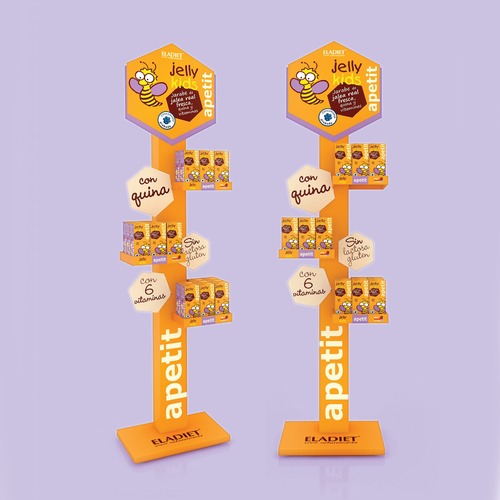
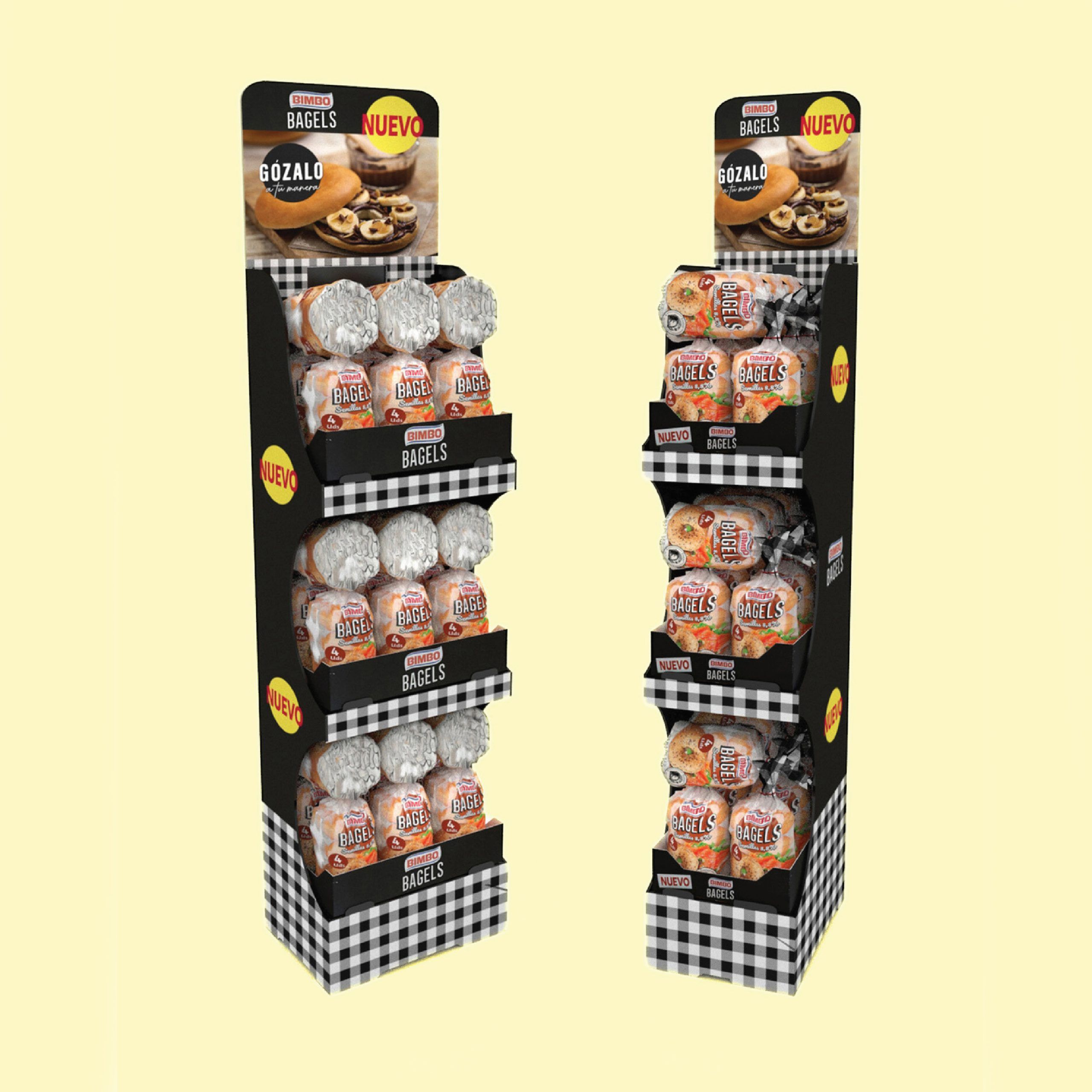
The FSDU
The vertical structure placed in the aisle. FSDU stands for free-standing — or floor-standing — display unit, and it is how the format is named across UK and European retail. It is the most visible format in the catalogue and the one that gives a brand a location of its own.
Three things decide whether it works: height, so it is seen from the aisle entrance; load per shelf, so it holds up full and not only on build day; and ease of assembly, because nobody in a store reads instructions.
The format is covered on the floor-standing displays page.
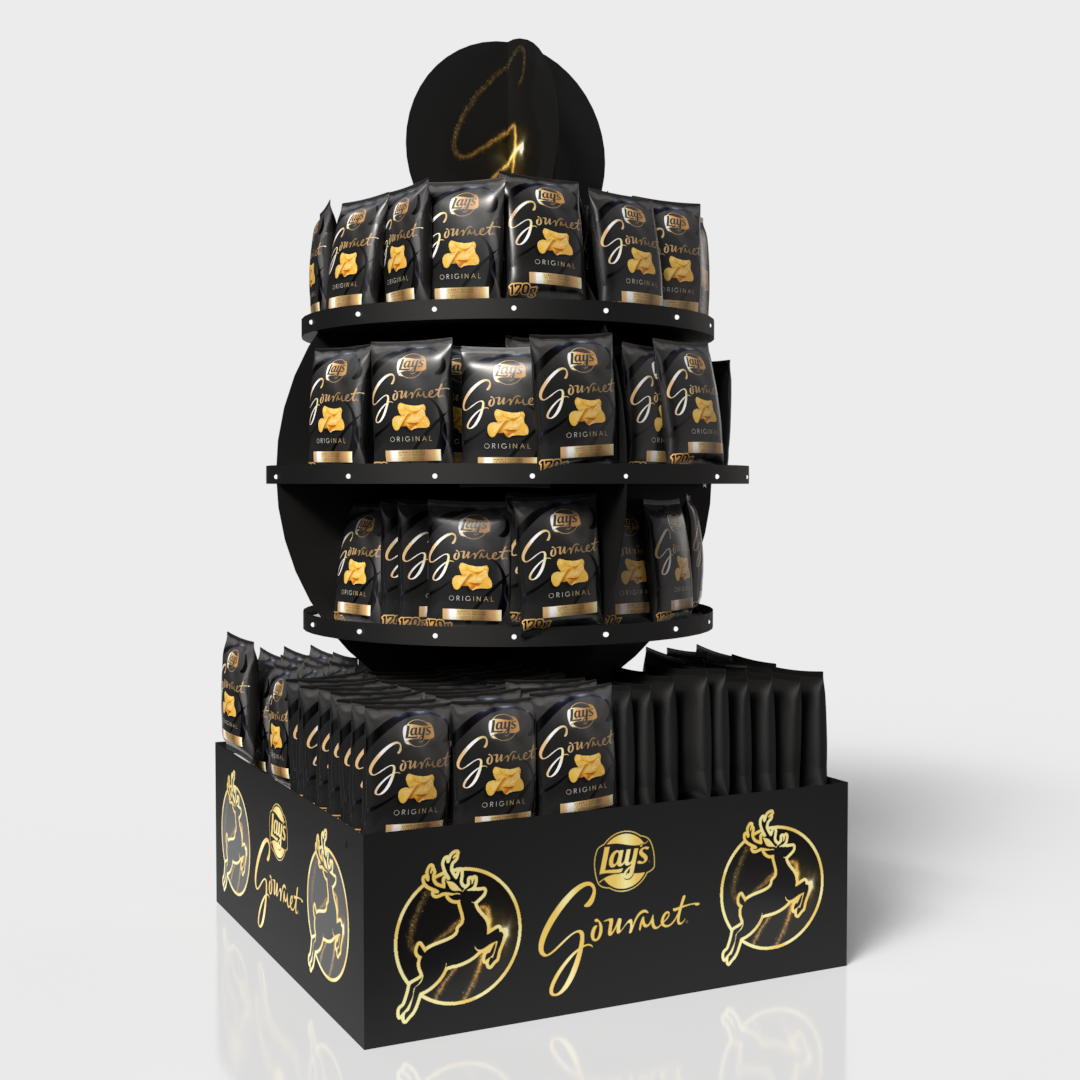
The dump bin
An open-top floor unit where product sits loose and shoppers pick straight from the top. Where an FSDU presents each item individually on shelves, a dump bin holds bulk — which makes it the natural fit for impulse lines, promotional stock and seasonal ranges, at gondola ends and store entrances.
The pallet display
High capacity, for volume promotions in large-format retail. The piece arrives filled on its pallet and empties in place, which removes product transfer in store. It is the most demanding format on load calculation, particularly in beverages and food.
The counter display unit (CDU)
A small format at the till, aimed at impulse purchase. CDU is the trade acronym. The challenge isn’t size but the footprint the retailer will accept, and a refill that works without dismantling the piece. It is the dominant format in pharmacy and cosmetics.
Covered on the counter displays page.
Formats that communicate
These pieces don’t hold product: they signal, frame or announce. They are lighter, cheaper, and go where the product already is.
The totem
A tall silhouette, often die-cut to the shape of the product or a campaign character. It doesn’t present, it signals. A wayfinding piece, built to be seen from the far end of the aisle. See cardboard totems.
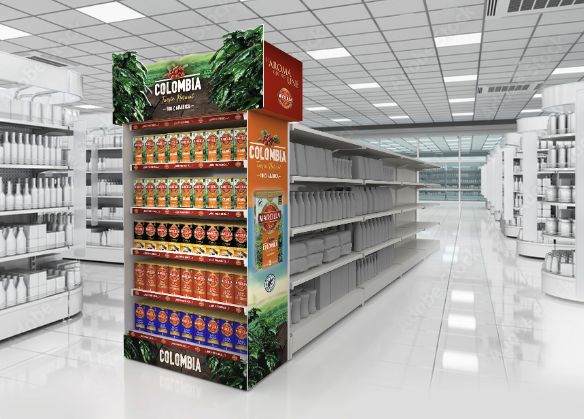
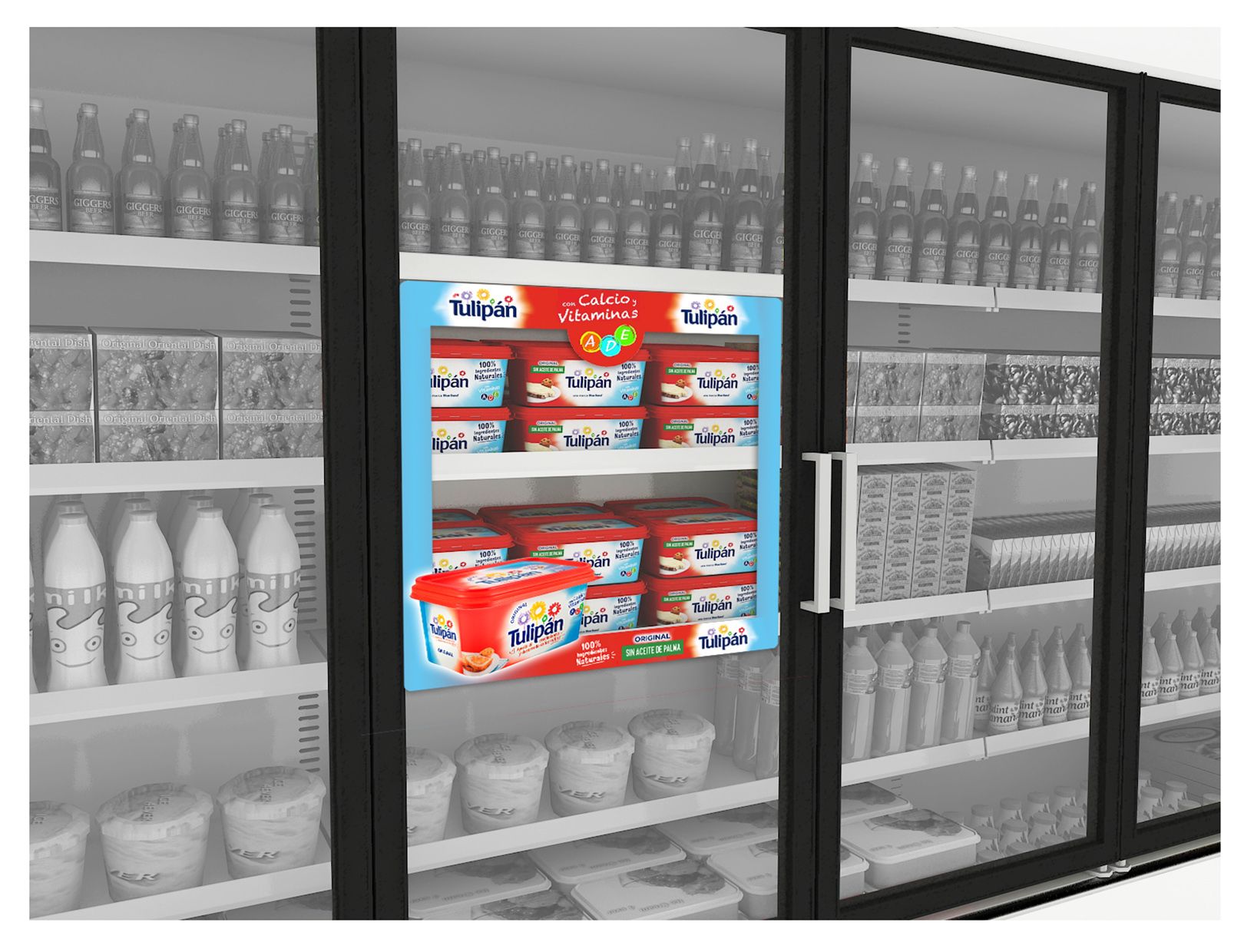
The shelf wrap
The range is highlighted inside the existing planogram, without asking the store for extra space. It is the easiest compromise to get a retailer to accept, and often the best impact-to-negotiation ratio.
Shelf-edge signage
Light signage fixed to the shelf, perpendicular to the run, that stops the eye of someone walking the aisle. A small piece with a real effect: it lifts one reference out of the wall of product around it.
Hanging displays
Suspended above the shelf, these work a space nobody else occupies. Useful in highly competitive categories where the shelf is saturated but the air is free.
Exhibition stands
Technically outside the store, but the same craft: same materials, same logic of fast assembly and flat transport. The difference is context — at a trade show people walk fast, in groups, with a packed schedule. See exhibition stands.
How to choose between them
The question that sorts fastest is: does the piece have to hold product? If yes, you are in displays and a load has to be calculated. If no, you are in communication and the subject becomes visibility and location.
After that come channel, duration and store count. The guide to choosing a POS display walks that decision through four questions.